



 Which American 2000s TV Series Are You?
 The Perpetual Student Syndrome: When Self-Development Becomes a New Form of Procrastination
 Test: Who Were You in a Past Life?
 Your Mythological Totem: Take the Test and Find Out Which Ancient Creature Protects You?
 Adulthood Test: Find Out How Old You Really Are
 Empathy Check. How Well Developed Is Your Emotional Intelligence?

 English
 Русский
 Deutsch
 Español
What New Skills You Should Start Learning Today
In reality, the future doesn’t arrive suddenly—it’s built from a set of concrete abilities that already determine who keeps up with change and who ends up chasing it. We’ve identified key skills for adults, explained why they matter, and explored how to develop them independently (or with the help of a virtual assistant).
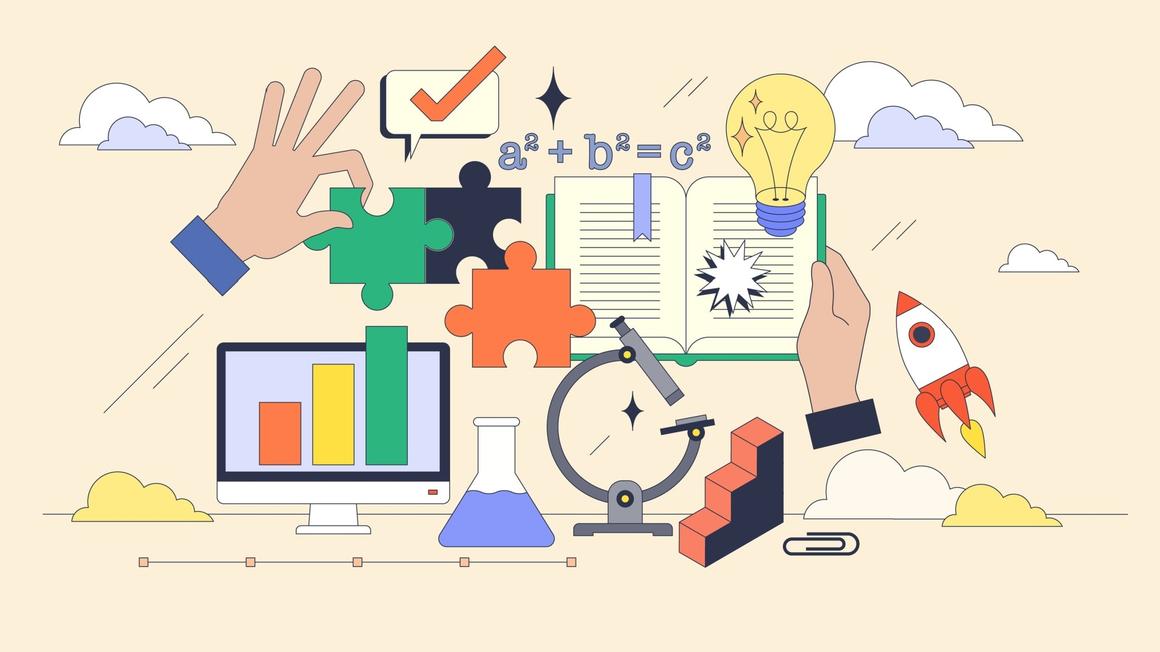
Critical Thinking and Creativity
This is the ability to analyze information, separate facts from opinions, and generate new ideas, as well as the capacity to develop and apply both logical and associative thinking in practice.
Why is it important? In today's world-overflowing with redundant and fake information-the ability to ask the right questions, find the necessary data, verify its accuracy, and invent unconventional solutions is more valuable than memorizing facts (which become outdated faster). Moreover, automation eliminates routine tasks-human advantage will lie in the ability to see unusual connections and assess risks.
Digital Literacy
Not everyone has to be an IT specialist, but it's important to understand how digital tools work. Digital literacy is a set of knowledge and skills that allow a person to use digital technologies safely and effectively for work, study, and everyday life. It helps people navigate information flows and protect personal data from fraud.
Digital literacy includes the following skills:
-
The ability to work with various computer programs, operating systems, applications, and neural networks.
-
Information management-the ability to find, evaluate, analyze, and use information from diverse digital sources, distinguishing reliable data from fake ones.
-
Security-skills for protecting personal data, creating strong passwords, recognizing phishing and fraud, and behaving safely online.
-
Communication-the ability to communicate effectively through digital channels (email, messengers, social media) while maintaining digital etiquette.
-
Content creation-skills for creating and distributing digital content, whether text, images, or video.
Emotional Intelligence
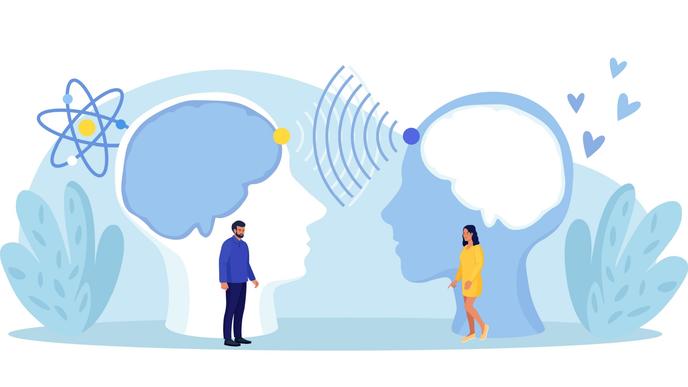
This is a person's ability to understand and manage their own emotions, as well as to recognize and understand the emotions of others, using this knowledge to build connections and maintain effective relationships. Emotional intelligence (EI) is often considered more important for success in life and work than traditional IQ. The main components of emotional intelligence are:
-
Self-awareness: the ability to recognize your emotions, understand their causes, and how they affect behavior.
-
Self-regulation: the ability to manage emotions, control impulses, handle stress, and adapt to change.
-
Social awareness: the ability to understand the feelings, needs, and motives of others and establish trust.
-
Social skills: the ability to express emotions effectively, negotiate, resolve conflicts, and work in teams.
Adaptability and Learning Agility
Adaptability-the ability to respond flexibly to change, whether it's a new work task, a shift in external conditions, or unexpected difficulties-includes:
-
Flexible thinking and readiness to change actions;
-
The ability to stay calm and accept reality;
-
The skill of finding new solutions when old methods fail.
Learning agility-the ability and desire to quickly acquire new knowledge, skills, and processes-is essential for professional growth and fast adaptation to a changing work environment.
Today, markets and tools evolve rapidly, and the ability to learn efficiently and quickly is a competitive advantage. This isn't just about taking courses-it's about structuring learning and integrating knowledge.
Systems and Strategic Thinking
Systems thinking is the ability to perceive the world as an interconnected system. It enables analysis of how one action affects other parts of the system and its overall long-term state. It also involves the ability to set goals and determine the best path to achieve them, taking all factors and potential risks into account.
Altogether, this allows one to adapt to change, avoid mistakes, manage resources effectively, create competitive advantages, and succeed in both business and personal life.
Entrepreneurial and Financial Literacy
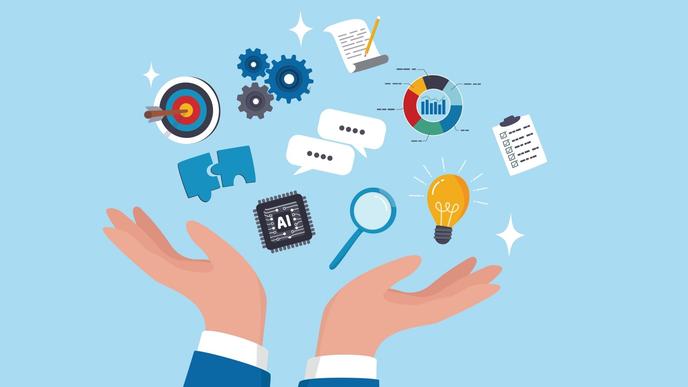
Simply put, this is the ability to see opportunities, manage budgets (including personal ones), handle finances effectively, make informed decisions, and achieve financial well-being. Even in employment, knowledge of business fundamentals increases one's value as a specialist-you better understand priorities and propose economically sound solutions.
Financial literacy includes budgeting, expense and debt management, and understanding financial instruments and risks. Entrepreneurial literacy complements it by focusing on applying this knowledge to business development, such as attracting investment and optimizing costs.
How to Develop These Skills
Everyone learns differently, but there are five universal steps-a classic framework for mastering new or refreshing outdated skills:
-
Define your goal and success criteria. What exactly do you want to learn? Within what timeframe? How will you measure progress? For example: "Reduce task-switching time by 30%," or "Create 5 presentations with clear data visualizations."
-
Audit your current level. Evaluate your strengths and weaknesses on a 1-10 scale. You can also use a SWOT analysis. To do this, create a table with four sections: "Strengths" (internal advantages), "Weaknesses" (disadvantages), "Opportunities" (external favorable factors), and "Threats" (external risks). After filling it out, analyze the results to develop strategies for using strengths, addressing weaknesses, leveraging opportunities, and counteracting threats.
-
Make learning a habit. Build regular practice. Don't try to master everything at once-start with 15-30 minutes a day. Consistency is key. Keep a calendar or learning journal to track your progress. Visual progress motivates. Reward yourself for achieving milestones (completing a course module, mastering a new technique) to reinforce the habit.
-
Reflect. Use journaling to reflect and evaluate your learning. Ask yourself: "What have I learned?", "What was most useful or most difficult?" Discussions with others-mentors or peers-can also help, focusing on concrete results compared to initial goals. Be honest with yourself. To get a real picture, stay objective and avoid self-criticism. Remember, reflection is not a one-time act but a cyclical process that helps you adapt and grow.
-
Integrate new knowledge into real life. Incorporate skills into your workflow through templates, checklists, and tool integrations. Apply what you learn immediately-don't wait for the "perfect" moment. Mistakes at the beginning are normal.
Lectera’s Online Courses by topic
How AI Helps
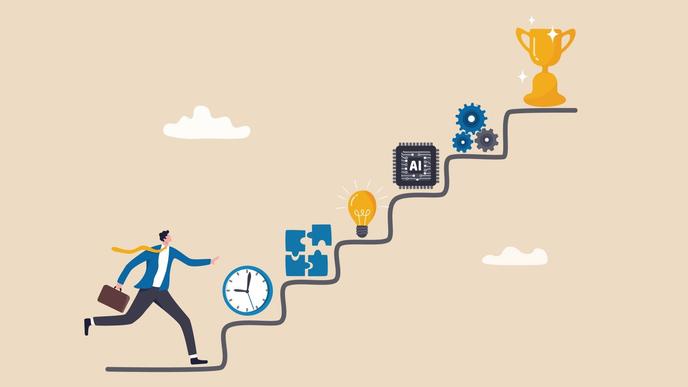
AI accelerates information retrieval, generates ideas, provides instant feedback, and helps automate routine tasks. For example, you can ask AI to formulate a SMART goal like this: "Create a SMART goal for developing critical thinking over 12 weeks for a product manager. Include 4 checkpoints and measurable progress criteria".
You can also ask AI to audit your current level-upload work samples (essays, code, reports), and have it evaluate logical errors, weak arguments, and suggest improvements. AI will give concrete feedback and a list of skills to develop. Moreover, AI can tailor a learning plan to your individual profile-selecting resources, exercises, and checklists. Ask it to design a 12-week practical plan for developing data literacy: weekly assignments and specific exercises in Excel or SQL. You can also have it generate practice tests and evaluate results-for example: "Give 10 scenarios that require creative solutions to improve customer retention with a $1,000 budget limit." AI can even simulate difficult negotiations, playing the role of an uncooperative partner.
AI can also help measure success-tracking metrics and personal KPIs. Once it creates your learning plan and practice tasks, ask it to remember them. As you complete and upload assignments for review, AI can track how many exercises you've done, your total errors, and how much they decrease as you progress through new material.
The combination of critical thinking, technical literacy, emotional intelligence, and adaptability will make you resilient and always ready for change. Developing these skills isn't just for the sake of a résumé checkbox-it's about having a toolkit for maintaining independence and relevance in today's algorithmic world. By improving your skills systematically, in small iterations, and complementing the process with AI (as an assistant, mentor, or coach), you'll see tangible results in just a few weeks.
Share this with your friends via:
Latest News

Fall 2026 promises to be an eventful season for education worldwide.

Tickets for WE Convention 2026 are now available - with 25% off for EARLY BIRDS!

The private school Alpha School, which has opened campuses from New York to California, uses AI bots to teach children academic subjects for just two hours a day. The school has no traditional teachers, no homework, and tuition reaches $65,000 per year.

UK Prime Minister Keir Starmer has announced a major public-private partnership in the field of artificial intelligence. Google, Microsoft, Amazon and NVIDIA, together with the government, are launching an AI skills training programme for 7.5 million British workers.

International educational programmes provider Study Group has announced a change of ownership. The company has been acquired by Arete Education – an investment structure in the higher education sector created by Global University Systems (GUS) and US private investment firm Brightstar Capital Partners.
