










 Which American 2000s TV Series Are You?
 The Perpetual Student Syndrome: When Self-Development Becomes a New Form of Procrastination
 Test: Who Were You in a Past Life?
 Your Mythological Totem: Take the Test and Find Out Which Ancient Creature Protects You?
 Adulthood Test: Find Out How Old You Really Are
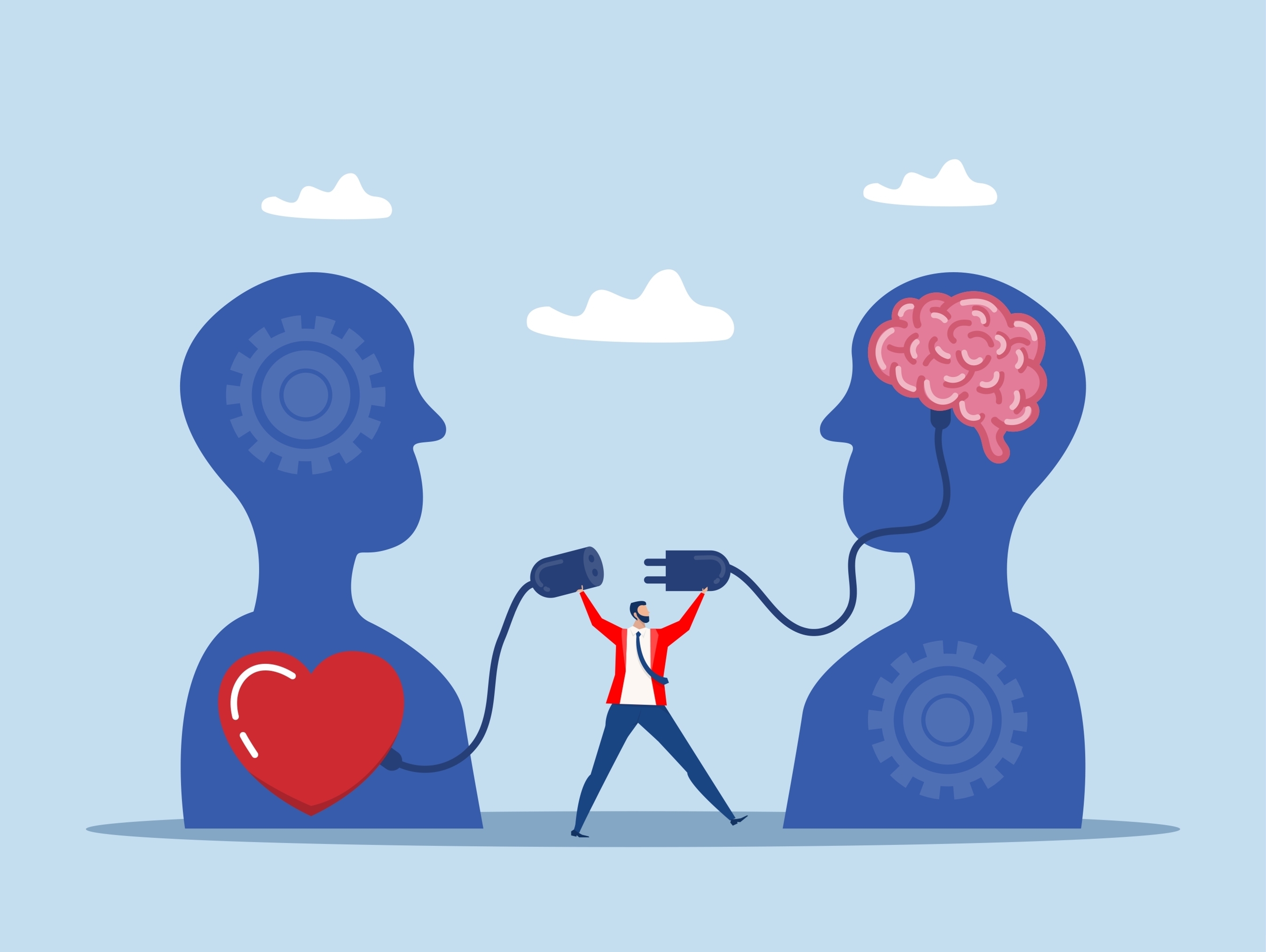 Empathy Check. How Well Developed Is Your Emotional Intelligence?

 English
 Русский
 Deutsch
 Español
Career FOMO: How to Stop Feeling Like Everyone Around You Is Progressing Faster
You’ve probably experienced this before: you open LinkedIn for literally five minutes to check a post or reply to a message, and half an hour later, you catch yourself thinking that something seems to be wrong with your career.

One person you know has been promoted. Another has moved to an international company. A third is talking about how they mastered artificial intelligence in just a few months and can now complete tasks twice as fast. Someone posts a photo from an industry conference, someone else shares a new certificate, and another person announces the launch of their own project.
The most surprising thing is that just half an hour ago, you were perfectly satisfied with your own job. You were calmly getting things done, making plans, and thinking about the weekend. But after seeing just a few posts, you suddenly start to feel as though everyone around you is progressing faster, making bolder decisions, and generally leading a much more eventful professional life.
And yet, objectively, nothing has happened. You haven't been fired, your salary hasn't gone down, and your manager hasn't expressed any dissatisfaction. Only one thing has changed: in the space of a few minutes, you've seen dozens of other people's successes.
This is how career FOMO most often begins.
When It Feels Like Everyone Else Is Already Far Ahead
FOMO stands for Fear of Missing Out. While this feeling used to be associated with travel, parties, or an active social life, today it is increasingly connected to work.
It can feel as though new projects are being launched somewhere right now, promising job opportunities are opening up, in-demand skills are emerging, and you risk being left behind. Take even a short break, and it seems as though the market has already raced ahead.
These thoughts are familiar to many people, especially now that professions are changing faster than ever. Not long ago, everyone was talking about remote work. Then digital skills became essential. Today, it's artificial intelligence. It can seem as though it is no longer possible to remain in demand without constantly racing to keep up. But the problem isn't really the pace of change.
Why We Compare Ourselves to Others Much More Often Now

Just ten or fifteen years ago, most people compared themselves with a fairly limited circle: colleagues, for example, friends, or former classmates. We had a rough idea of the path each of them had taken and how long it had taken them to get promoted or change careers.
Today, all it takes is opening your phone to see dozens of completely different stories within a matter of minutes. Someone has landed a new position, someone has moved to another country for work, someone has mastered a new profession in six months, while someone else explains how AI has helped them cut their working time in half.
Each of these stories can be inspiring on its own. But taken together, they create the impression that absolutely everyone around you is constantly moving forward while, for some reason, you are the only one standing still.
This has a lot to do with the way our attention works. We barely notice the hundreds of people whose lives haven't changed at all today. But we immediately notice those who have been promoted, launched a business, or shared a major achievement.
Social media only amplifies this effect, because these are exactly the kinds of posts that tend to attract more reactions and become more visible than the rest.
Why This Kind of Comparison Is Almost Always Unfair
There is another reason why career FOMO arises so easily. We see the result, but almost never the journey that led to it.
Behind an announcement about a new position may be months of job searching. Behind a post about someone's own business may be dozens of mistakes, financial risks, and failed attempts. Behind a photo from a conference may be years of studying, working overtime, and professional self-doubt.
With our own lives, it is the exact opposite. We remember perfectly well the projects we failed to finish on time, unsuccessful interviews, mistakes, exhaustion, and the moments when we wanted to give everything up. This creates a strange comparison: we judge our own career as a whole, with all its difficulties, while judging someone else's by a handful of their most impressive achievements. It is hardly surprising that the conclusion is not in our favor.
That is why career FOMO does not necessarily mean that you are actually falling behind. Much more often, it is the result of seeing other people's achievements every day while almost never seeing the full story behind them.
Why Career FOMO Rarely Helps You Grow

It may seem that constantly comparing yourself with others has at least one advantage. If there are so many examples of successful careers all around us, shouldn't that motivate us to move faster?
Sometimes it really does. After reading someone else's success story, we update our résumé, finally sign up for a course, improve our English, or apply for a job we have been putting off for a long time. That kind of impulse can be useful.
Problems begin when it turns into a habitual state. You stop consciously choosing your direction and start reacting to every new story that appears in your feed. Today, it feels like you urgently need to learn programming. Tomorrow, you need an MBA. A week later, you suddenly want to start your own business, and a few days after that, you start thinking about looking for a job abroad because that is what so many people seem to be doing right now.
As a result, you spend more and more time and energy while feeling less and less satisfied with your own work. The reason is simple: it is impossible to move in every direction at once.
Lectera’s Online Courses by topic
How Other People's Goals Become Our Own
There is a simple question worth asking yourself every time a new post makes you want to change something radically.
"Do I really want this, or does it just seem like this is what everyone is supposed to be doing right now?"
The difference is enormous. Suppose you have always enjoyed developing as an expert. You like your profession, you are willing to take on challenging projects, and you want to gradually deepen your knowledge. But after seeing several posts about colleagues getting promoted, you suddenly start to feel that a career cannot be considered successful unless you move into a management position.
Or take another example. You were perfectly comfortable with your own pace of learning until you saw yet another post featuring a long list of certificates. At that moment, you begin to feel that you have already fallen hopelessly behind, even though nothing has changed in your professional life over the past few weeks.
This is how career FOMO gradually replaces your own priorities with other people's. You stop thinking about what you actually want and increasingly try to live up to expectations that, in reality, no one has ever placed on you.
How to Stop Living at Someone Else's Pace
It is unlikely that you will be able to get rid of career FOMO completely. You will still see other people's achievements, read success stories, and sometimes compare yourself with others. This is a natural feature of human psychology. But you can prevent these comparisons from influencing important decisions.
- Check Where a New Goal Came From
Before signing up for yet another course or completely changing your professional plans, take a short pause. Ask yourself: was I already thinking about this a month ago, or did this desire appear after seeing a single post on social media?
If the idea has genuinely interested you for a long time, it is probably worth taking action. But if the interest disappears on its own after a few days, it means you were being driven by emotion rather than by a real need.
- Don't Turn Your Feed Into a System for Evaluating Your Own Life
Professional communities and social media can be inspiring, but they rarely show the full picture. You do not need to know about every promotion, new project, and certificate that other people receive. This information is not always relevant to your own career path.
If you feel anxious or irritated every time you scroll through your feed, the problem may not be a lack of motivation but an overload of other people's success stories.
- Compare Yourself Only With Your Past Self
This is the fairest way to measure progress. Instead of asking, "Who has already achieved more?", try asking yourself a different question: what have I learned over the past six months?
Perhaps you have become more confident speaking in front of an audience, mastered a new tool, learned how to negotiate, or started completing familiar tasks faster. Changes like these rarely become the subject of attention-grabbing posts, but they are exactly what gradually transforms a career.
- Allow Yourself to Move at Your Own Pace
There will always be someone who got promoted earlier, mastered a new profession faster, or launched a project that you are only just beginning to think about. But someone else's speed says nothing about yours. Everyone has their own experience, circumstances, and goals. That is why success cannot be measured on a single scale.
A career is not a daily race or a leaderboard where the winner is whoever masters the latest trend first. What matters far more is understanding exactly where you want to go. Otherwise, you can spend your entire life chasing other people's achievements without ever getting any closer to your own.
Share this with your friends via:
Latest News

Fall 2026 promises to be an eventful season for education worldwide.

Tickets for WE Convention 2026 are now available - with 25% off for EARLY BIRDS!

The private school Alpha School, which has opened campuses from New York to California, uses AI bots to teach children academic subjects for just two hours a day. The school has no traditional teachers, no homework, and tuition reaches $65,000 per year.

UK Prime Minister Keir Starmer has announced a major public-private partnership in the field of artificial intelligence. Google, Microsoft, Amazon and NVIDIA, together with the government, are launching an AI skills training programme for 7.5 million British workers.

International educational programmes provider Study Group has announced a change of ownership. The company has been acquired by Arete Education – an investment structure in the higher education sector created by Global University Systems (GUS) and US private investment firm Brightstar Capital Partners.
