











 Which American 2000s TV Series Are You?
 The Perpetual Student Syndrome: When Self-Development Becomes a New Form of Procrastination
 Test: Who Were You in a Past Life?
 Your Mythological Totem: Take the Test and Find Out Which Ancient Creature Protects You?
 Adulthood Test: Find Out How Old You Really Are
 Empathy Check. How Well Developed Is Your Emotional Intelligence?

 English
 Русский
 Deutsch
 Español
Change Yourself: How to Fix Personality Traits You Don't Like
We are constantly told how important it is to accept and love ourselves as we are. After all, we are all unique, and acceptance is the only path to recognizing our individuality.

In reality, this path is far from the only one, nor is it always the most correct. What is more important is to learn not just to accept, but to overcome our weaknesses, control negative character traits, and eventually neutralize them. But is it possible to change your character, or is it given to us at birth and not subject to significant transformations? Let's try to find out.
Are we capable of changing ourselves?
The answer is unequivocal: yes! And this is a scientifically proven fact.
Moreover, you have most likely already changed many times and are very different from the self that was just starting adult life - you just don't notice it.
The roots of internal conflict
But before you rush to fix your irritability, anxiety, suspiciousness, distrust of people, or, on the contrary, excessive frankness, it is worth understanding: where did this dissatisfaction with yourself even come from? Of course, it's all individual, but as a rule, there are only a few most compelling reasons:
The trap of social comparison. We live in an era when the lives of other people - retouched, perfect, with several filters - flash before us daily in social media feeds. But in reality, we are comparing completely irrelevant things - our own internal fears and doubts, apprehensions - with someone else's external and often feigned success, vacations somewhere on islands, happy family life. The result is predictable: we seem to ourselves wrong, unlucky, somehow not like everyone else. But you have no idea what real life is sometimes like, hidden behind tons of layers of Photoshop in pictures.
Childhood and family scenarios. One of the most powerful factors in shaping our attitude toward ourselves is family. If as a child you were praised only for A's or a perfectly cleaned room, and severely punished for mistakes, you might have learned: "I am valuable only when I am perfect. I always need to prove that I am good, then I will be loved." This is how neurotic character traits and perfectionism are formed.
Fear of rejection. Social psychologist Mark Leary developed the "sociometer" theory, according to which a person's self-esteem functions as an internal indicator of the degree to which they are accepted or rejected by others. That is, self-esteem is not so much about "do I like myself" but about how much others accept us. Our internal sociometer constantly scans the environment: "What will people around me think? Will I be accepted in a new group?" If it seems to us that certain traits threaten our belonging to a group (for example, shyness prevents us from making friends or irritability gets in the way at work), we immediately label them as our "enemies" and want to eradicate them. It is normal to want to be accepted, but moderation is important in everything, and you definitely shouldn't give up yourself for the sake of being accepted by others.
How to distinguish your own desire from one imposed from outside
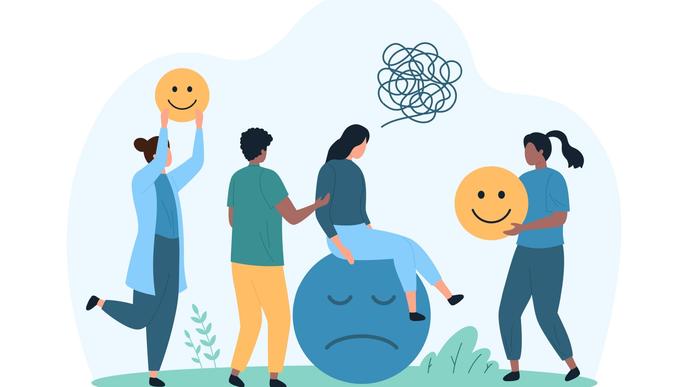
It is most important to answer this question for yourself; otherwise, you risk spending years trying to become "convenient," "positive," "like everyone else," only to ultimately discover that you feel only the loss of your own self, instead of the expected acceptance and approval. You can distinguish your true intentions from "obligations" by several criteria.
For example, if a particular trait really gets in the way of your life - for instance, you realize that hyper-empathy only causes you suffering, prevents you from achieving goals, destroys relationships - that is your request. But if the trait does not bother you but annoys someone else - for example, your slowness and deliberateness irritates friends who, on the contrary, seem too reactive to you - then perhaps the problem is not with you.
Also remember the criterion of "non-judgmental observation." Try for a week to forget the words "bad," "ashamed," "normal/abnormal." Simply notice things about yourself: "I get angry when this happens," "I get anxious before a call from...", "I feel happy when I am alone." Often, imposed beliefs are based precisely on value judgments, so it is worth avoiding labels both towards yourself and others.
And another criterion - your own interest. Do you want to change a certain trait in yourself because it will open up new opportunities for you, introduce you to new people, broaden your horizons?
Which traits should be neutralized, and which are better to befriend, even if you think they are "bad"
Absolutely "bad" or "good" character traits, just like people themselves, do not exist. There are traits that, in certain manifestations and a specific context, help, while in other circumstances, they harm.
Psychologists typically use the "Big Five" model. They identify five global dimensions of personality, each of which is a spectrum:
-
Neuroticism (sensitivity to negativity, anxiety, emotional instability);
-
Extraversion (sociability, energy, need for stimulation);
-
Conscientiousness (organization, responsibility, self-discipline);
-
Agreeableness (cooperation, trust, empathy);
-
Openness to experience (curiosity, creativity, readiness for new things).
Research shows that particularly high neuroticism and low conscientiousness are the traits that most strongly correlate with subjective unhappiness and problems in life. High neuroticism is one of the key risk factors for the development of anxiety and depressive disorders. This is worth fighting even at a physiological level.
But introversion (as the opposite of extraversion) is often simply a way to restore energy. You don't need to fight or resist it; instead, you can learn to live with it by establishing a suitable rhythm: more time alone to restore resources, fewer noisy parties.
A high level of conscientiousness in its extreme manifestations can turn into exhausting perfectionism. Researchers at the University of Kentucky suggest paradoxical exercises for such cases: deliberately do something "at 80%," send an email with a typo, or leave work exactly at 6:00 PM, leaving tasks unfinished. This sounds scary to perfectionists, but it is precisely how you can break the vicious circle of "everything must be perfect."
How to change: a guide to action
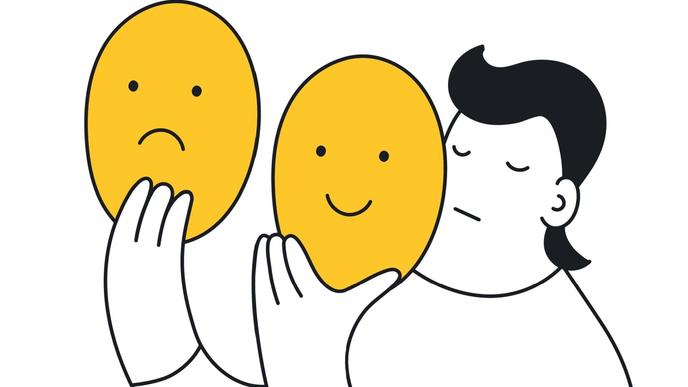
The key idea of modern research is that you can change a personality trait if you consistently, day after day, step out of your comfort zone and behave the way a person with the desired trait would behave. First, imagine that you are playing a role until a particular behavior becomes a habit. Over time, these "foreign" actions become natural to you.
Here are several specific techniques for behavioral experiments:
1. The "Small Steps" Technique
Choose one trait and one specific action opposite to the habit you want to get rid of. For example:
-
If you are anxious and avoid communication: once a day, say "hello" to a stranger (a neighbor in the elevator, an employee from another company in your business center, and so on). After a week, make it harder: for example, ask "how are you?" to the barista while buying your morning coffee.
-
If you have an explosive character and sudden mood swings: the next time you feel like being sarcastic or responding rudely to someone, force yourself to pause for 5 seconds, take several deep breaths in and out, and only then return to the conversation.
-
If you are prone to procrastination: implement the "one small task" rule. Not "write the annual report," but "open the document and write three sentences." Done - you can get distracted.
2. Mindfulness Practices
Meditation and mindfulness techniques are real tools that change your habits. They teach you to notice emotions, delve into them, and explore the causes of certain reactions. To start, try to set aside 5-10 minutes a day and just sit, observing your breath, without concentrating on anything except the inhales and exhales. When thoughts start to drift away somewhere, gently bring your attention back.
3. Gratitude Journal and Reframing
This is a simple practice that helps you notice the good things in life and train positive thinking. It is enough to write down 3 to 5 specific things, events, or people you are grateful for daily or several times a week. It is also useful to catch negative thoughts and challenge them: "Is it really that bad? What is the evidence for and against?" Here are a few more important rules for keeping such a journal:
-
Be specific: instead of general phrases ("I am grateful for my family"), describe details, for example, "I am grateful to my husband for a delicious dinner."
-
Notice the little things: give thanks for tasty coffee, a sunny day, a passerby's smile, a pleasant phone conversation with your mom.
-
Write by hand: this helps you focus better and evokes a greater emotional response.
-
Don't treat it as an obligation, enjoy it: write when you feel like it, without turning it into a chore. If you miss a day - no big deal, just continue the next day.
4. Implementation Intention
Research shows that if you simply set a goal ("I want to be calmer" or "I want to find it easier to meet new people"), your chances of success are slim. But if you formulate a specific plan - "When X happens, I will do Y" - the effectiveness increases dramatically.
For example: "When I feel myself starting to get angry during a meeting, I will take three deep breaths before expressing my point of view." Or: "When I want to put off an important task until tomorrow, I will first start doing it for 10 minutes."
How to track progress and not give up

The hardest part about changing yourself is not starting, but continuing. At first, you will feel awkward and strange; it will seem like you are pretending. This is normal. The main thing is to overcome this feeling. It is useful to keep a change journal for this purpose. Not "I was good today and didn't snap at anyone," but concrete facts: "Today during a meeting, I wanted to lose my temper, but I paused and responded calmly." This will give you a foothold.
You can also use quantitative measurements. Take the Big Five test at the beginning of your journey, when you first start thinking about seriously approaching change, and then again after 2-3 months. You will see objective numbers - whether you have shifted or not. Even a small change (for example, if you had 80% neuroticism and it became 70%) is already a victory.
But nevertheless, be prepared for sharp downturns. In general, progress is never linear, so often moving backward is also part of progress. In such a case, what matters is not that you made a mistake, lost control of yourself, or got confused, but that this did not make you give up.
What is even more important and even more pleasant - reward yourself. If you managed to go a week without conflicts at work, became friends with a couple of new colleagues, finished work on time without working overtime at the expense of unhealthy perfectionism - treat yourself to something nice. This is how the brain reinforces new behavior.
Lectera’s Online Courses by topic
A new life doesn't start on Monday
You have seen that it is possible to change character traits you don't like. This is by no means a fast process, so you are unlikely to start a new life next Monday, but that is no reason to give up.
Before embarking on this path - energy-consuming, long, and exhausting - honestly answer yourself: are you changing for yourself or for someone else? If you realize that you are closer to the second option, think again. Perhaps the only trait you need to develop is the ability to hear yourself, not the crowd.
Share this with your friends via:
Latest News

Fall 2026 promises to be an eventful season for education worldwide.

Tickets for WE Convention 2026 are now available - with 25% off for EARLY BIRDS!

The private school Alpha School, which has opened campuses from New York to California, uses AI bots to teach children academic subjects for just two hours a day. The school has no traditional teachers, no homework, and tuition reaches $65,000 per year.

UK Prime Minister Keir Starmer has announced a major public-private partnership in the field of artificial intelligence. Google, Microsoft, Amazon and NVIDIA, together with the government, are launching an AI skills training programme for 7.5 million British workers.

International educational programmes provider Study Group has announced a change of ownership. The company has been acquired by Arete Education – an investment structure in the higher education sector created by Global University Systems (GUS) and US private investment firm Brightstar Capital Partners.
