













 Which American 2000s TV Series Are You?
 The Perpetual Student Syndrome: When Self-Development Becomes a New Form of Procrastination
 Test: Who Were You in a Past Life?
 Your Mythological Totem: Take the Test and Find Out Which Ancient Creature Protects You?
 Adulthood Test: Find Out How Old You Really Are
 Empathy Check. How Well Developed Is Your Emotional Intelligence?

 English
 Русский
 Deutsch
 Español
How to Restore Communication with People You Lost Contact With Long Ago
Sometimes we look back at our lives and suddenly realize that there are no longer people nearby who once were very important to us. Childhood friends, colleagues with whom we shared not only tasks but also lunches; inspiring mentors; people with whom we once felt a sense of closeness and complete mutual understanding.

But years go by, events accumulate, priorities change - and bonds that once seemed strong suddenly dissolve over time. Someone moved away, someone went into a relationship or career, someone went through a difficult period and shut down, and someone simply lost the thread of communication gradually, without conflict or a specific reason.
And then the moment comes when the desire to restore contact becomes clear. We miss how easy it was to talk to this person, their look, their sense of humor, and the version of ourselves that appeared next to them. But along with this comes awkwardness: is it appropriate to write after so many years? Will it seem strange? Will they recognize us as we were? Will they think we are reaching out because we need something? These doubts often stop people from taking the first step - and they miss the chance to restore a warm connection that could reenter their life.
In this article, we will explore how to restore lost connections gently, respectfully, without pressure, and without artificiality. This is not a set of template phrases, but a deep look at what happens to people after separation, pauses, and silence - and how to build a bridge back, step by step.
Why We Lose Contact - and Why It Is Normal
Many people take the loss of connection painfully. It may seem that if contact has broken, then someone is at fault or someone has stopped caring. However, in reality, most breaks are neutral. They happen not because the relationship has lost its value but because a person cannot maintain all connections, roles, and tasks in life simultaneously. We often mistakenly assign emotional meaning to the loss of communication, although it is much more often related to circumstances, not feelings.
Connections most often break because:
- a stage of life ended (university, a project, a job, a move);
- life speeds stopped matching;
- someone had problems they did not want to talk about;\
- people grew in different directions;
- priorities and workload changed;
- the connection required more energy than the person had.
It is important to understand: the disappearance of a connection is not an indicator that the relationship was not valuable enough. It is an indicator of the amount of resources each person had at that stage of life. When we accept this without blaming ourselves or others, we gain the opportunity to calmly restore communication, without shame or justification.
How to Understand Whether You Should Reconnect
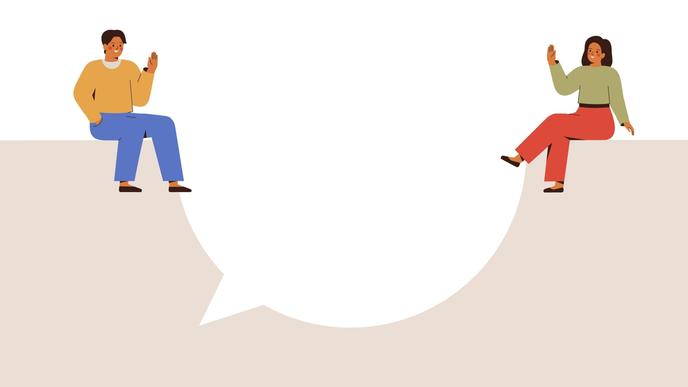
Before writing to someone, it is important to honestly answer the question: why do you want this? We often idealize the past or try to return something that was once important, but this desire should be based on a real inner need, not nostalgia for nostalgia's sake. If you feel genuine warmth remembering the person and understand that communication with them once made you calmer, wiser, or happier, that is a good reason to restore the connection.
You should reconnect with someone if:
- communication brought you inspiration, warmth, mental clarity;
- you felt like a better version of yourself next to this person;
- there was no conflict, you simply drifted apart over time;
- the connection feels unfinished but still alive;
- you remember the person with sincere warmth;
- you want not to "return the past," but to create a new quality of communication.
But it is equally important to be honest in the opposite direction. If communication once drained you or made you feel worse, if you remember not moments of closeness but moments of tension - perhaps it is better to leave things as they are. Restoring a connection only makes sense when it can benefit both sides.
You should be cautious if:
- the relationship was painful;
- you feel tension or fear;
- the connection constantly required more from you than it gave;
- there were manipulations or dependence (both physical and emotional).
The First Step: How to Initiate Contact Properly
The hardest part is starting. After a long time, any message seems too long, too short, too formal, or too personal. But people do not need perfect wording - they need naturalness and the feeling that you are reaching out sincerely, not out of obligation.
- Simplicity
The best messages are short and warm. Trying to explain every year of silence makes the text heavy. It is much nicer for a person to see a simple, genuine message: "I thought of you and wanted to write." This creates space for ease - and makes them smile instead of analyzing your words.
Another example: "Hi! I found our old chat and remembered how great our conversations were. If you don't mind, maybe we could meet sometime?"
- Acknowledging the Pause
Pretending the pause did not happen creates artificiality. People appreciate honesty, especially when expressed delicately. It helps relieve tension for both sides. You acknowledge the pause without turning it into drama - and that's an important balance.
For example: "We haven't talked in a long time - life takes everyone in different directions. But I really think of you often."
- No Pressure
The biggest mistake is making the person feel you expect an immediate reaction. Gentleness and freedom are your best allies. This approach allows the person to answer at their own pace and not feel obligated.
For example: "If you'd like to chat, I'm here. If not - it was still nice remembering you."
How to Continue Communication Comfortably and Naturally

Restoring contact is only the first step, but it is just as important to continue communication in a way that develops softly, without pressure and without trying to return to the old form of the relationship. When people haven't talked for a long time, the dynamics almost always change, and you must treat this carefully. If you allow yourself not to rush and not try to instantly rebuild past closeness, you create a space where the relationship can be reborn into a much more mature and comfortable version. Below are several principles that help build the next stage of communication harmoniously.
- Don't Try to Restore the Past
Often, when contact is restored, people try to recreate the same feelings, the same ease, and the same emotional closeness they once had. But time changes everyone, and attempts to talk "as before" can create a feeling of artificiality or even pressure. Instead, it is better to acknowledge that both of you are already different, and communication begins to develop naturally rather than through an attempt to "copy" the past.
For example, if you were once very close, you should not expect the person to start sharing personal things right after the first message. Instead of trying to restore the old dynamic, talk about the present: what you are reading, how life is going, what inspires you. This shows the person that you accept who they are now - and you are not trying to bring back their former version. This creates comfort and trust.
- Talk About the Present
Past memories may serve as a warm bridge, but the foundation for new relationships must be built on the present. It is important to discuss what is happening now: changes in your life, new hobbies, ideas, important events. This focus creates a sense of reality and deep respect - you show that the person interests you here and now, not only as part of the past.
For example, instead of endlessly reminiscing about school stories, you can say: "I remember how much you loved photography. Are you still doing it?" Or: "You once wanted to move - did it work out?" These questions shift the conversation into the present and create points of connection that can grow into a new, meaningful relationship.
- Don't Rush Intimacy
After a long pause, you may want to quickly regain closeness, especially if the relationship was important before. But trying to "speed things up" can make the person feel pressured and pull away. It is much more effective to keep a natural pace: answer calmly, avoid demanding immediate reactions, and don't ask overly personal questions too early.
For example, if the person tells you they went through a difficult time, it's better not to immediately dig deeper: "What happened? Why? How did you cope?" Instead, you can gently support them: "That sounds tough. If you ever want to share more - I'm here." This shows sensitivity and respect, which are especially important when rebuilding a relationship.
- Show Genuine Interest
Genuine interest is the foundation of any restored connection. People immediately sense when questions are asked out of politeness rather than true curiosity. Try to ask about things unique to the person, not generic questions that can be answered with one word.
For example, if you remember that this person once took floristry courses, you can ask whether they still practice, whether they create bouquets, or whether they've opened a small workshop. If they were once passionate about fashion history, ask whether they still follow runway shows and which designers inspire them. Such questions show sincerity and remind the person that you remember them - not just the fact that they existed in your past.
Lectera’s Online Courses by topic
How to Maintain the Restored Connection So It Doesn't Disappear Again
It is important to remember that any connection requires participation, but not effort. Small gestures of attention create a sense of closeness much better than rare, grand attempts. Send short messages "just because," share funny or inspiring things you find, and congratulate them on holidays like someone who genuinely cares - not like someone who feels obligated.
At the same time, avoid the trap where only one person becomes the constant initiator. If the connection is valuable to both sides, over time the exchange will become mutual: the person will begin to write too, ask questions, and show interest. Naturalness is the key.
If the Person Doesn't Respond: What to Do and How to Accept It Calmly
Sometimes you write - and receive silence. Or the person responds very briefly, without emotional involvement. This can be painful, but it is important to remember: their reaction is almost never about you personally. Many people at certain periods simply cannot communicate - emotionally, psychologically, or physically. Some are burned out, others have family problems, and some simply lack the energy even for close people.
In such situations, the best approach is to give space and not push. You can send a small warm message from time to time - but without expecting or demanding a reply. Sometimes people need time to learn to open up again. And if the connection truly matters, they will return when they are ready.
There is a unique quality to connections that return after many years: they become deeper, softer, and wiser. People no longer compete, compare themselves, or try to appear better. They look at each other differently - with respect, warmth, and gratitude for the path that took them in different directions but eventually crossed again. Sometimes restored communication brings an incredible sense of support - not loud friendship, not constant contact, but a quiet, honest, mature connection. These relationships often turn out to be the strongest: without naivety, but with genuine humanity.
Share this with your friends via:
Latest News

Fall 2026 promises to be an eventful season for education worldwide.

Tickets for WE Convention 2026 are now available - with 25% off for EARLY BIRDS!

The private school Alpha School, which has opened campuses from New York to California, uses AI bots to teach children academic subjects for just two hours a day. The school has no traditional teachers, no homework, and tuition reaches $65,000 per year.

UK Prime Minister Keir Starmer has announced a major public-private partnership in the field of artificial intelligence. Google, Microsoft, Amazon and NVIDIA, together with the government, are launching an AI skills training programme for 7.5 million British workers.

International educational programmes provider Study Group has announced a change of ownership. The company has been acquired by Arete Education – an investment structure in the higher education sector created by Global University Systems (GUS) and US private investment firm Brightstar Capital Partners.
