







 Which American 2000s TV Series Are You?
 The Perpetual Student Syndrome: When Self-Development Becomes a New Form of Procrastination
 Test: Who Were You in a Past Life?
 Your Mythological Totem: Take the Test and Find Out Which Ancient Creature Protects You?
 Adulthood Test: Find Out How Old You Really Are
 Empathy Check. How Well Developed Is Your Emotional Intelligence?

 English
 Русский
 Deutsch
 Español
6 Life Areas You Have Almost Certainly Never Paid Attention To
We are used to explaining people’s success with obvious factors: knowledge, hard work, luck, connections, time, persistence. But sometimes you look at a person — and you simply don’t understand why exactly them.

Why do they live more steadily, more confidently, more harmoniously than others? Why do they seem to have an inner core, a calmness, even a certain "aura"? At the same time, externally they may not differ from anyone else. They are not necessarily wealthy, not necessarily the best specialists, not necessarily exceptionally talented. But it feels as if they know something unavailable to others. This is often noticeable in the smallest details: how they react to stress, how they make decisions, how they speak, how they express themselves. It's as if their inner world is arranged more deeply than it appears.
The reason almost always lies in the fact that such people pay attention to areas that most never consider important. We are used to thinking about "life domains" superficially: work, relationships, health. But real change doesn't happen there - it arises in hidden, subtle, almost invisible zones that shape our state, our choices, our reactivity, our way of thinking, and even our self-perception. These areas are rarely discussed in self-development books, they are difficult to measure, but they form that very inner stability so many people lack. Below are six spheres you have likely never thought about - but which can radically transform your life.
1. The Sphere of Micro-Decisions
We tend to consider only big decisions important - changing jobs, choosing a partner, setting large goals. But in reality, our lives are shaped by micro-decisions - the small, almost invisible choices we make dozens of times a day. Most people never analyze them, because they seem too insignificant. But they define the quality of your day - and therefore the quality of your life.
Micro-decisions include:
-
replying to a message now or later;
-
scrolling a feed or taking one small useful step;
-
going to bed on time or staying up again;
-
saying "no" or agreeing yet again out of politeness;
-
spending five free minutes consciously or "draining" them into your phone.
Each of these does nothing by itself, but together they create a pattern. A person who "manages" their micro-decisions lives far more intentionally than someone who sees themselves as a victim of circumstance. Managing small choices is managing attention and state. To analyze your micro-decisions, ask yourself one simple question: "Does this step bring me closer to or further from the version of myself I want to become?" This is a surprisingly simple yet incredibly effective practice.
If you want to change your micro-decisions, start by tracking them throughout the day. Observe where your attention goes, where you automatically choose the easy path, what triggers procrastination. Create a small list titled: "The micro-step I will choose next time." Gradually, this list will become the foundation for big changes.
2. The Sphere of Energy Expenditure and Renewal
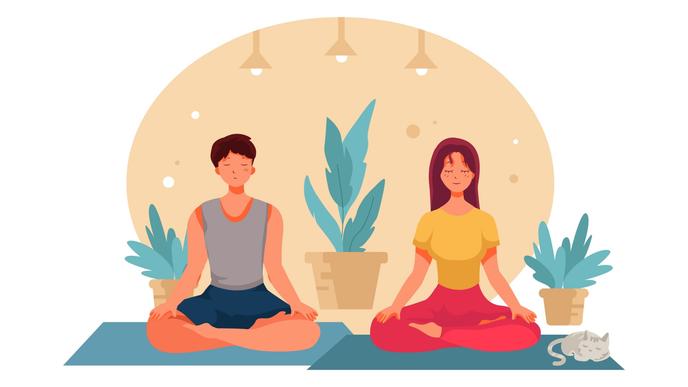
We talk a lot about productivity, but almost never - about energy. People try to force themselves to work more, achieve more, push harder, but fail to see that the main cause of most failures is not a lack of discipline, but depletion. Energy is your main resource. If it is at zero, no amount of willpower will save you. But most people do not track where they lose it or where they gain it.
The energy sphere includes:
-
hidden sources of loss (noise, chaos, emotional fluctuations);
-
toxic micro-conditions (overloaded chats, visual clutter, obligations "out of politeness");
-
energy donors (silence, creativity, order, nature, clarity);
-
methods of restoration (sleep, rituals, communication with the right people).
To manage energy, it is important to identify energy leaks - what drains you even in small interactions. It may be a person, a task, a communication format, a place, or even a thought. Then identify your energy sources: what truly restores you. This sphere seems "unscientific" until you notice that your quality of life directly depends on it. Try practicing sensory reduction: spend 15-20 minutes a day in silence, with your eyes closed or in a dark space, doing nothing - and observe how your energy changes.
Energy management is a skill that makes a person resilient. People who achieve stable results rarely operate through "willpower" - they simply know how to recover. They know their rhythm, their limits, their replenishment points. That is why they win in the long run.
3. The Sphere of Personal Aesthetics
Aesthetics are not just interior design or clothing style. They are how you feel the world. Which images, colors, textures, smells, and sounds create your internal state. Most people do not realize that their aesthetic environment affects their emotional stability. A person whose home, workspace, and daily details are aesthetically "tuned" lives more calmly, productively, and confidently.
Personal aesthetics include:
-
visual surroundings (colors, lighting, details);
-
sensory triggers you surround yourself with (scents, textures, sounds);
-
habitual rituals of keeping your space beautiful;
-
a sense of harmony and personal taste.
If your environment creates chaos - your thinking will be chaotic. If your environment creates quiet - your mind will be quiet. If you are surrounded by things you dislike - your internal background will feel irritated. And if your space inspires you - you become more inspired. Aesthetics are the "external interface" of your mental state. Start small: change harsh lighting to warm, remove irritating objects, add items that evoke positive emotions. This creates a new emotional atmosphere that makes life easier.
4. The Sphere of Intellectual Nutrition

We know it is important to monitor what we eat. But almost no one monitors what they feed their brain. Intellectual nutrition is the entire informational stream that shapes your thinking. What you read, watch, hear, and discuss. It is not just data - it is the building material of consciousness.
An intellectual diet includes:
-
the information you consume;
-
the informational noise that clutters your mind;
-
intellectual vitamins - ideas that develop you;
-
mental toxins - content that triggers anxiety or aggression.
If your day consists of news, TikTok clips, endless scrolling, and chaotic chats, your mind loses depth, and your energy - the very energy we discussed above - is wasted on processing useless data. Add books, lectures, expert discussions, and meaningful articles to your "intellectual menu." You do not need to consume them constantly - just make them the majority, and reduce the "fast food" for your brain.
Lectera’s Online Courses by topic
5. The Sphere of Micro-Relationships
We usually analyze relationships with close people, colleagues, and partners. But the most important connections are micro-relationships - short interactions with "secondary" people. They are invisible, but they form your social climate and emotional background.
Micro-relationships are:
-
how you communicate with strangers;
-
how you respond to a delivery person or cashier;
-
how you interact with colleagues from other departments;
-
how you behave around unfamiliar people;
-
how you react to small requests.
A person with "healthy" micro-relationships lives in a friendlier reality. They receive more support, more opportunities, more goodwill. People trust them, gravitate toward them, and want to help. Conversely - toxic micro-relationships slowly destroy every area of life.
To develop this sphere, simply start noticing how you behave in micro-contacts. Sometimes a smile, a respectful tone, honesty, or politeness is enough - and your environment begins to respond.
6. The Sphere of Internal Priorities and Taboos
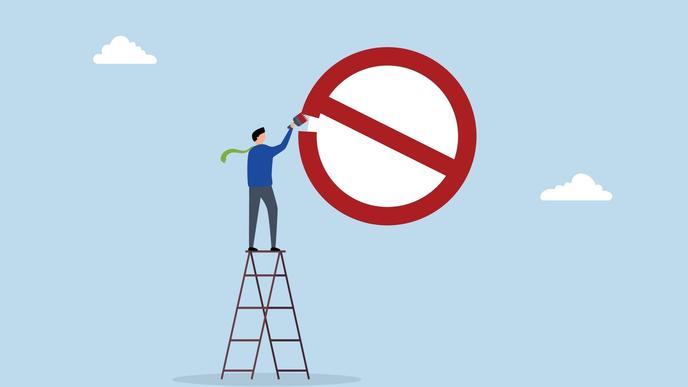
Every person has a hidden system: what I can do, what I cannot do, what I must do, what I would never do. These rules are rarely conscious, but they influence behavior far more than external circumstances. These are your internal contracts with yourself.
Such invisible beliefs may sound like:
-
"I must be convenient,"
-
"I can't refuse,"
-
"I have to do everything perfectly,"
-
"I must always be strong,"
-
"I don't have the right to rest."
These are not just thoughts - they are your inner constitution. Until it becomes conscious, you live not your own life, but by inherited rules absorbed long ago without reflection. But if you identify, rewrite, or cancel these internal taboos, you can transform your behavior and liberate enormous resources.
To work with this sphere, ask yourself:
-
Which rules do I follow automatically?
-
Who instilled them in me?
-
Do they help me in reality?
-
Which taboos limit my freedom?
When you form priorities of your own - not inherited rules - your personality becomes whole, and your choices become free.
These six spheres do not lie on the surface; they are not discussed as often as career or health, but they are precisely what shape the quality of your life. They form your foundation: your energy, resilience, confidence, internal state, way of thinking, and how you interact with the world. By working with them, you do not change isolated habits - you change the entire system. And then change becomes not a temporary spark, but a stable lifestyle. Life becomes clearer, more conscious, and more peaceful.
Share this with your friends via:
Latest News

Fall 2026 promises to be an eventful season for education worldwide.

Tickets for WE Convention 2026 are now available - with 25% off for EARLY BIRDS!

The private school Alpha School, which has opened campuses from New York to California, uses AI bots to teach children academic subjects for just two hours a day. The school has no traditional teachers, no homework, and tuition reaches $65,000 per year.

UK Prime Minister Keir Starmer has announced a major public-private partnership in the field of artificial intelligence. Google, Microsoft, Amazon and NVIDIA, together with the government, are launching an AI skills training programme for 7.5 million British workers.

International educational programmes provider Study Group has announced a change of ownership. The company has been acquired by Arete Education – an investment structure in the higher education sector created by Global University Systems (GUS) and US private investment firm Brightstar Capital Partners.
