












 Which American 2000s TV Series Are You?
 The Perpetual Student Syndrome: When Self-Development Becomes a New Form of Procrastination
 Test: Who Were You in a Past Life?
 Your Mythological Totem: Take the Test and Find Out Which Ancient Creature Protects You?
 Adulthood Test: Find Out How Old You Really Are
 Empathy Check. How Well Developed Is Your Emotional Intelligence?

 English
 Русский
Quest to Learn: When the Best Learning Happens Through Games
Games давно перестали быть чем-то, что доступно исключительно детям.

Even adults over 40 today know what Dungeons & Dragons is, have played some kind of simulator or shooter at least once, and quite often enjoy spending a weekend with a gamepad in their hands. And the point here is not simply that computer games have become a form of psychological release and escape for many people, although of course that is part of it too. Scientists have long proven that play is not just entertainment, but also a very powerful mechanism for engagement, training, and learning. Games are even used with older adults as a form of dementia therapy and a way to support cognitive functions. A well-designed game almost always has what so many lessons and courses lack: a clear goal, fast feedback, the right to make mistakes, another attempt, and a clear, measurable sense that you are moving forward.
This is exactly how Quest to Learn came about - one of the most unusual school models of the past few decades. This public school opened in New York in 2009 for grades 6 through 12, and from the very beginning it was built not around the traditional lesson, but around the principles of game design and игрового опыта. And no, it did not stop at simply bringing more games into school. They completely rebuilt the very organization of learning according to the logic of a well-designed quest - and in this article, we will explain how they did it and what it looks like in practice.
How Quest to Learn Emerged and What It Is Built On
Quest to Learn emerged at the intersection of pedagogy, design, and game studies. The school was developed by the Institute of Play together with New Visions for Public Schools, and one of the key figures in the project was Katie Salen Tekinbaş, an experienced game designer and researcher in learning and entertainment culture. The school's own documents explicitly stated that the goal of the project was to use the strategic thinking associated with games and game design as a new learning tool and educational paradigm.
From the very beginning, this model also had another important principle: the school should not imitate a video game on the surface - it should literally become a game, and a good one at that. Quest to Learn's project materials emphasized that games are especially good at placing a person in a complex problem space where knowledge has to be applied right now and in practice in order to move forward. This is where the entire system is rooted: first, within the learning process, there appears a challenge, a deficit, a problem, a role, or a mission - and only then does a real need arise to master the necessary knowledge or tool. Not "we learned fractions because that is what the curriculum says," but "we learned to convert fractions into decimals because otherwise we could not decode the hidden message."
Another foundational principle of Quest to Learn is systems thinking - the ability to see the world as a system of interconnected relationships rather than a set of unrelated topics. Here, students are taught not simply to solve an isolated problem, but to notice how a process is structured, which elements influence each other, where feedback appears, and why changing one part changes the whole construction.
In a twenty-month study launched immediately after the school opened to measure its effectiveness, Quest to Learn students showed statistically significant growth in systems thinking, time management, and teamwork skills. In its early years, the school also demonstrated standardized test results roughly in line with city averages, which was important for a model that many might initially have considered too "unconventional" for a serious academic environment.
The Core Rules and Techniques of Quest to Learn
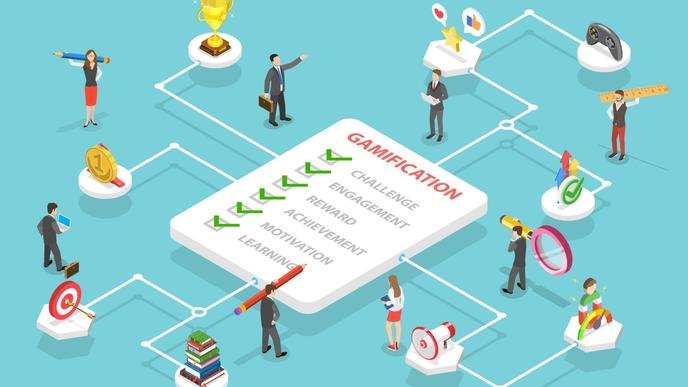
Below are the key methods that sustained this system. And these are exactly what make Quest to Learn interesting not only as one specific New York school, but also as a source of ideas for any kind of learning - school, university, corporate, or adult education.
1. Learning is built through missions, not through topics
At Quest to Learn, major sections of the curriculum were turned into Missions, within which there were smaller Quests, and everything culminated in a Boss Level - a two-week intensive at the end of the semester. The school's official model described it quite concretely: ten weeks were devoted to the main mission, followed by two weeks for the final challenge, where students had to bring together all the knowledge, processes, resources, and relationships they had developed and solve a final problem. Because of this, learning stopped feeling like a series of fragmented, unrelated lessons and instead became a long, meaningful movement with steadily increasing complexity.
2. Knowledge is introduced not in advance, but "on demand" from the task
This is one of the strongest moves in the entire model. In the first semester, sixth-graders at Quest to Learn learned to convert fractions into decimals in order to crack a hidden code in a library book; worked with maps and atlases when they needed to create a guidebook for a reality show; and mastered standardized measurement while helping fictional inventors from LittleBigPlanet through video instructions. This kind of delivery creates not a formal "you have to learn this," but a real "without this, you cannot move forward." In that sense, Quest to Learn works like a good quest: first the obstacle appears, then the need for a new skill.
3. "Boss Level" replaces the usual final assessment
The best-known element of this system is the so-called Boss Level, a term that in ordinary games refers to the battle with the main boss of a level. At this stage, regular classes are paused, classrooms turn into workspaces, and students solve one large task in teams, ending with a public presentation of the result. School descriptions emphasize that this is not a decorative "game layer," but a space for serious work: research, hypothesis-building, testing, critique, revision, and ultimately public defense all happen here. Examples of Boss Levels include staging short plays based on fairy tales, organizing street games, creating a guide website for New York neighborhoods, and building a sculpture from recycled materials.
4. Every student is given a role
In a regular school, a child or adult most often receives instructions and carries them out as an executor. In Quest to Learn, the participant is given a position: researcher, engineer, author, ethnographer, producer, planner. This is similar to how, at the beginning of a game, you choose a class for your character. Students can also change their roles within a Boss Level, creating a kind of redistribution of responsibility. When a person has a role, the quality of engagement changes: they are no longer simply answering the teacher's question, but acting within a shared structure.
5. Feedback is built into the process instead of arriving at the end as a grade
Transparent channels of communication are very important in Quest to Learn. The school model emphasized that all learning situations should give the student clear, ongoing, process-embedded feedback: how they are moving toward the goal, what is already working, what needs strengthening, and where to go next. This sharply distinguishes the school from formats in which a person works almost blindly for a long time and then receives a single number or a general comment at the end. This logic is especially valuable in adult learning as well, because it helps people stay in the process and not lose the feeling of progress.
6. Interdisciplinarity as part of the curriculum's very structure
At Quest to Learn, learning was designed from the start so that state standards were interwoven with real ways of "knowing and doing." The school combined subject areas into larger domains and built tasks so that mathematics, the humanities, natural sciences, design, and media did not exist in separate boxes. A good example would be assignments that simultaneously required cartography, character analysis, narrative thinking, measurement, visual presentation, and teamwork. This is what makes the model especially interesting today, when almost any complex real-world problem is interdisciplinary by definition.
7. Public presentation as a learning norm
At Quest to Learn, the result is not supposed to disappear into the teacher's folder. In the description of the model, the same formula is repeated several times: serious work ends with a public defense of the project. A person does not simply "turn in the topic," but brings the solution outward, shows how they thought, what their hypothesis was based on, why they made a particular decision, and how they refined it after criticism. This is a very powerful technique that works extremely well not only in school, but also in university, corporate learning, and programs for adult professionals.
8. Learning continues beyond the lesson and becomes part of a single ecosystem
Quest to Learn was not limited to lessons. It also had additional spaces such as the game studio Mobo Studio, where students learned video production, digital storytelling, and other practices, then brought those skills back into their academic tasks. In one example, students uploaded, assessed, and reviewed one another's video tutorials using rubrics. This is an important detail: a strong educational model does not stop when the bell rings, but connects different learning contexts into one whole.
9. Even complex scientific topics are translated into a problem you want to solve
In one of the sample missions, students were asked to guide a beam of light to a target, changing its direction at least five times along the way and figuring out how light passes through different materials, is filtered, amplified, and altered. In another fragment of a mission description, a photon appears - a beam of light that has "lost its way." Behind the external game frame lies very real physics: hypotheses, experimentation, the properties of materials, testing, and applying knowledge within a design. This technique works especially well in subjects that otherwise tend to seem too abstract and dry.
Lectera’s Online Courses by topic
What You Can Borrow from Quest to Learn

The most interesting thing about Quest to Learn is that all of the principles discussed above are easy to borrow and use in any other educational methodology, including course design or even self-learning. For example, you can:
-
Replace the topic with a mission. Instead of "today we are studying Excel formulas" or "today we are covering photosynthesis," begin with a task for which the knowledge is genuinely needed. As soon as a person encounters an obstacle and a clear goal, attention stops being polite and becomes real.
-
Break a large module into a chain of quests. Not one massive block, but several short steps with different kinds of actions: find, check, compare, assemble, explain, test. This works both in school courses and in adult professional education because it reduces overload and creates a sense of movement.
-
Introduce roles into teamwork. Not simply "do it together," but "we have a researcher, an editor, an analyst, a presenter, a coordinator." A role almost always increases engagement and makes each person's contribution visible.
-
Shift assessment toward public demonstration of results. A presentation, defense, explanation of a solution, display of a prototype, or articulation of decision-making logic often contributes more to the development of thinking than an ordinary test of reproduction.
-
Build fast feedback into the process. Do not wait until the end, but give the learner clear signals along the way: what has already been assembled, where the weak spot is, what needs refinement. This is how most strong game systems are designed - and it is exactly what so many educational formats desperately lack.
Unfortunately, despite its proven effectiveness and success, Quest to Learn has still not become a mass template for the whole world. But it remains one of the most original attempts to rebuild school at the level of its internal structure. And that is its main value. It clearly showed that learning can be built not only on explanation, discipline, and testing, but also on challenge, pathway, role, team dynamics, rapid feedback, and an honest feeling of progress. Is that not the ideal formula for the education of the future that experts around the world are still searching for?
Share this with your friends via:
Latest News

Fall 2026 promises to be an eventful season for education worldwide.

Tickets for WE Convention 2026 are now available - with 25% off for EARLY BIRDS!

The private school Alpha School, which has opened campuses from New York to California, uses AI bots to teach children academic subjects for just two hours a day. The school has no traditional teachers, no homework, and tuition reaches $65,000 per year.

UK Prime Minister Keir Starmer has announced a major public-private partnership in the field of artificial intelligence. Google, Microsoft, Amazon and NVIDIA, together with the government, are launching an AI skills training programme for 7.5 million British workers.

International educational programmes provider Study Group has announced a change of ownership. The company has been acquired by Arete Education – an investment structure in the higher education sector created by Global University Systems (GUS) and US private investment firm Brightstar Capital Partners.
