














 Where Did the Tradition of Making a New Year’s Wish Come From
 How Not to Lose Focus When Learning Everything at Once: The Art of Selective Development
 Test. What Winter Dessert Are You?
 Test: What Kind of Ancient Goddess Are You?
 Test: Which Great Woman Would Invite You for Tea?
 Test: How Well Do You Balance Work and Personal Life?

 English
 Русский
 Deutsch
 Español
Where Did the Tradition of Making a New Year’s Wish Come From
Every December, we all become a little bit magical. Some whisper a dream as the clock strikes midnight, others write it down and burn it, and some simply make a wish that “everything will work out.”
Different countries, different times - but the ritual is the same: on New Year's Eve, you must make a wish. It's almost an obligatory part of the holiday, just like tangerines, a Christmas tree, and champagne.
Why has New Year's become the moment when millions of people simultaneously turn toward the future and say, "May it come true"? Where did this habit of asking for luck, hoping, and promising ourselves change actually come from? And why, despite all our progress and rational thinking, do we still believe in the power of a wish made exactly at midnight?
It all started with Babylon...
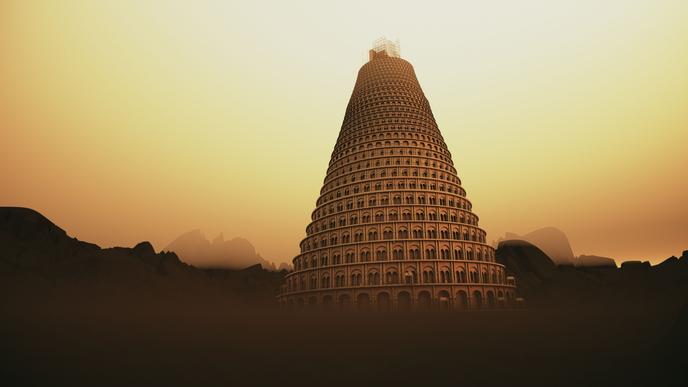
According to historians, the first "wish-makers" weren't romantics at all - they were the people of ancient Babylon. But back then, these weren't wishes - they were vows. Over four thousand years ago, they celebrated the New Year in spring during the Akitu festival. For ten days, people thanked the gods and made promises: to repay debts, work hard, be honest, and not be lazy. It was believed that those who kept their word would earn the favor of heaven. This is how the idea of "starting with a clean slate" and asking for a prosperous year was born.
Later, the ancient Romans joined the tradition. In 46 BCE, Julius Caesar established January 1 as the beginning of the year and dedicated the day to the god Janus - the deity of doors, transitions, and new beginnings. Janus had two faces: one looked into the past, the other into the future. The Romans brought him offerings and made vows for the coming year, asking him to help them keep their promises. This, in fact, gave birth to the modern tradition of making "New Year's resolutions" - to lose weight, start running, learn a new language, move to another city, and so on.
In the Middle Ages, Christians reinterpreted these pagan rituals. Monasteries had a tradition called the "Nights of Reflection": on New Year's Eve, monks reviewed their actions and decided what to correct in the future. In the 17th century, Puritans in England did the same - making "spiritual promises" to begin the year clean not only in body but also in conscience. Over time, this spread beyond monasteries, shifting the focus from repentance to personal renewal - people began to see New Year's as a symbolic opportunity to "become better."
Eventually, humanity grew weary of the severity of vows and the fear of punishment for breaking them. The ritual evolved: promises to the gods became promises to oneself ("I'll definitely lose weight next year!"), and then transformed into wishes - "I'd like this year to bring me…" After all, not every culture has the concept of a "New Year's vow," but almost all have a dream, a hope for a better future, and a small ritual to attract it.
How Different Nations Make Wishes and Attract Good Luck
Interestingly, the idea of "fixing a dream" and attracting good fortune in the New Year exists in nearly every culture - though each has its own unique way of doing it.
In Spain, it's customary to eat twelve grapes at the stroke of midnight - one for each chime. The key is not to miss any or you'll have an "incomplete" year. This tradition appeared in Madrid in the early 20th century and quickly spread throughout the country: each grape symbolizes good luck for one month of the new year.
In Japan, on New Year's Eve, Buddhist temples ring their bells 108 times. The number symbolizes the human vices and desires that must be cleansed. With every toll, people mentally say goodbye to something old and form one new wish - a kind of spiritual renewal.
In Brazil, to make a wish, people gather on the shore of the ocean and jump over seven waves. Each wave symbolizes a step toward good fortune and the blessing of the sea goddess Iemanjá. After the jumps, people throw flowers and small offerings into the water, thank the ocean, and ask for prosperity. White clothing, the sea, the moon, and thousands of people stepping into the water create an incredible spectacle - a blend of celebration, faith, and carnival.
In Scotland, there is an ancient tradition called first footing: the first guest to cross the threshold after midnight must bring coal, bread, or whisky - so the house will be warm, full, and joyful. People often wish that their "first step" in the new year will be lucky, believing that it determines the year ahead. In England, lovers' wishes will come true if they kiss under the mistletoe on Christmas or New Year's Eve.
And in Russia, making a New Year's wish comes with characteristic drama. They write their dream on a piece of paper, set it on fire, drop the ashes into a glass of champagne, and drink it before the last chime of the Kremlin clock. They say if you make it in time, the wish will come true.
Lectera’s Online Courses by topic
Why It Works: A Bit of Science

Psychologists explain that rituals create a sense of control over uncertainty. When we perform an action with a clear symbolic meaning - writing, burning, or saying something aloud - the brain perceives it as the beginning of a new process. It's not just a game, but a way to set a direction. Psychologists call this the "fresh start effect" - our brains love boundaries, dates, transitions, and rituals. They create an illusion of control and give us a chance to "reset." That's why even the skeptics admit: when the clock strikes twelve, they make a wish - "just in case."
Research from Harvard Business School shows that even simply describing a desired outcome increases the likelihood of achieving it, because it activates areas of the brain responsible for goal-setting. And experiments at Stanford University involving more than a thousand participants confirmed that "temporal landmarks" - like a Monday, a birthday, or New Year's - boost motivation and make goals feel more attainable. Our brains genuinely love "new beginnings": they give us the feeling that life can be rewritten.
So, in making a New Year's wish, there's not only a bit of magic but also real science. When we say "next year will be better," we're actually activating belief in change - and that's already the first step toward making it happen. So don't forget to make your cherished wish this time, too - we believe it just might come true!
Share this with your friends via:
Latest News

A significant stage in the development of the alternative education system has begun in West Northamptonshire in the UK: the County Council is actively calling on parents, guardians, and trustees to participate in shaping the future of this key area.

Outwoods Primary School in Atherstone, Warwickshire, having experienced deep sadness after the loss of their famous cat, Silla, has found solace in a new pet – a Maine Coon named Aloysius O’Hara.

In modern universities, artificial intelligence, and in particular ChatGPT, is rapidly transforming from a controversial tool into a full-fledged student assistant.

An innovative educational project is gaining momentum in UK primary schools, aiming to change attitudes towards video games.

The Massachusetts Institute of Technology (MIT) presents MIT Learn – a revolutionary online platform that opens a “new front door” to access university knowledge and resources.
